Date: Thursday, August 6
Time: 11:30 AM - 1:00 PM EDT
Location: Sinclair Community College, Building 12, Dayton OH
Registration: Early Registration $30
1 Continuing Educational Unit for AIA and GBCI- Pending
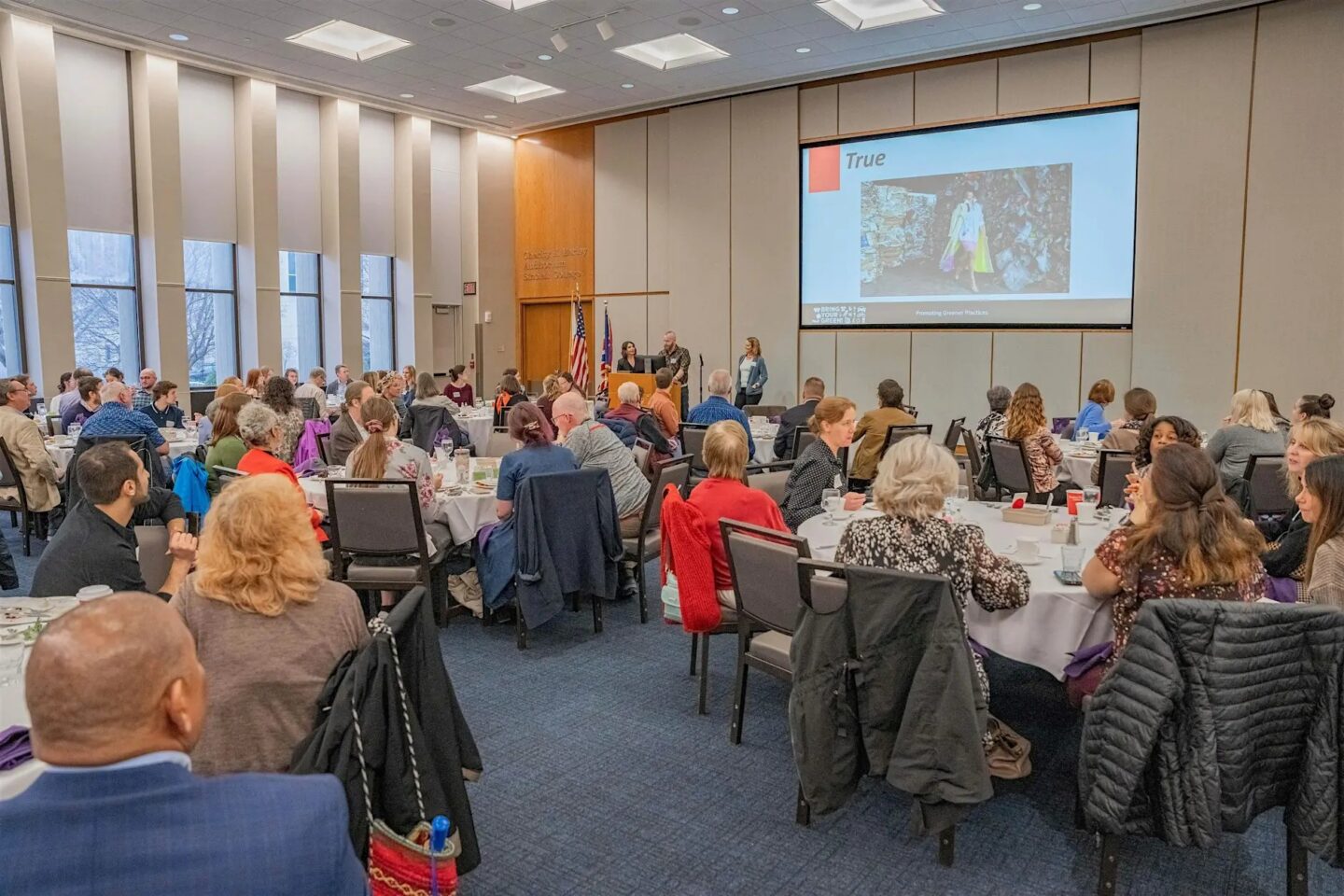
This luncheon explores the systems, behaviors, and assumptions we've learned to accept-and what happens when we begin to question them.
Event sponsors - Sinclair Community College/City of Dayton / LPA/AIA Dayton
Communities are shaped by the conditions they come to accept as "normal." Over time, gradual environmental degradation, inequitable access to healthy spaces, changing land-use practices, and resource consumption patterns influence the health, safety, and welfare of the public. This multidisciplinary program examines how everyday decisions related to waste management, renewable energy, environmental justice, technology, and sustainability affect the built environment and long-term community resilience. Through local case studies and expert perspectives, participants will explore the architect's role in challenging unsustainable practices, supporting equitable development, and advancing design strategies that protect public health, environmental quality, and community well-being.
Join us on August 6 at Sinclair in the Charity Early Auditorium (Room 172), Building 12; doors open at 11:00 AM. Buffet lunch; parking passes included.
The New Normal; One Acre. Two Futures - Solar vs Ethanol - A Framer's Choice; The AI Hype Balloon: Why the Robot Apocalypse is Cancelled; It Didn't Happen All at Once; Environmental Justice -Normal for Who? Five presenters and their thought-provoking topics.
1 Continuing Educational Unit for AIA and GBCI- Pending
Learning Objectives:
Recognize how shifting environmental baselines influence decisions affecting sustainability, public health, and the long-term performance of the built environment.
Compare the environmental, economic, and public welfare implications of alternative land-use and energy development strategies when planning resilient communities.
Evaluate how environmental justice influences equitable access to healthy environments, infrastructure, and community resources, and how these considerations inform planning and design decisions.
Apply principles of sustainability, conservation, and community engagement to support design and planning strategies that improve resilience and protect the health, safety, and welfare of building occupants and communities.
SCHEDULE:
August 6 Sustainability Luncheon:
What We Accept Becomes the Future: Sustainability, Environmental Justice, and the Built Environment
Summary
The New Normal
Over time, we quietly adapt-to more waste, fewer natural spaces, and shifting community habits-until they start to feel normal.
This talk explores how our environmental baseline has shifted without many of us realizing it, and how small, everyday choices can either reinforce that shift or challenge it.
Through a local lens grounded in action, this presentation asks an important question: What if change begins the moment we stop accepting decline as inevitable, and what if hope itself is part of the solution-not passive optimism, but the belief that communities, working together, still have the power to restore what's been lost and redefine what "normal" can become?
Brett Bogan
Executive Director (Interim)
Waste Free Dayton
Brett Bogan is a lifelong resident of the Miami Valley, and he resides in Troy with wife Laura and son Adrian along with 2 dogs, 2 cats, and a bunny. By day, Brett works in data protection and information security for RELX, the parent company of LexisNexis, where he has worked for 26 years. Outside of work, Brett is the Executive Director of Waste-Free Dayton, a grassroots nonprofit that promotes sustainable living practices, organizes monthly litter cleanups, and operates two compost dropoff stations in Dayton.
One Acre. Two Futures
Solar vs Ethanol -A Framer's Choice
The future doesn't just happen - it gets built, one decision at a time.
Across the same acre, two very different energy futures can emerge: one tied to long-standing agricultural and fuel systems, the other to rapidly expanding renewable energy infrastructure. This talk explores how land-use decisions connected to ethanol production and solar development influence energy systems, economics, environmental impact, rural identity, and the evolving role of agriculture in a changing world.
Through the lens of one farmer's choice, the presentation examines how the decisions made today will shape both the landscape and the systems communities depend on tomorrow.
Chris Meyer
Business Development Specialist
EBEB Solutions, LLC.
Chris Meyer has been a teacher of high school and college courses, an entrepreneur, an inventor, an insulation manufacturer, an economic development director in energy, an energy consultant, a board member for several local organizations, including president of the board of Green Energy Ohio, speaks passable Mandarin Chinese, has completed the Ohio State Four Miler several times, and continues to be a vocal advocate for renewable solar energy.
The AI Hype Balloon: Why the Robot Apocalypse is Cancelled
Every day, headlines warn us that Artificial General Intelligence (AGI) is just around the corner and an existential crisis is looming. But what if the biggest threat from AI is actually the hyperbole?
This talk takes a grounded, skeptical look at the reality of artificial intelligence. We'll explore the hard physical, mathematical, and infrastructure limits these systems are beginning to hit-from energy demand to computing constraints-and why the sci-fi apocalypse may be far less likely than we imagine.
Instead, the future of AI may look less like an all-powerful intelligence and more like a growing set of useful-but fundamentally limited-tools shaped by human choices, incentives, and priorities.
Jad Mubaslat
CTO
Bitwadi
Jad Mubaslat is a seasoned software engineer and technology leader, holding an M.S. in Industrial & Human Factors Engineering, a B.S. in Biomedical Engineering, and is an AWS Certified AI Practitioner. A long-time builder in the Bitcoin space, he founded BitQuick.co in 2013, has managed multiple engineering teams, and is the current CTO at Bitwadi. With over a decade of hands-on experience building complex infrastructure, Jad views the tech landscape through a lens of pragmatism and skepticism, rather than following marketing hyperbole.
Environmental Justice
Normal for Who?
For some communities, environmental burdens have never been temporary challenges-they've been part of everyday life for generations.
Unequal access to clean air, safe infrastructure, healthy environments, and investment has shaped what "normal" looks like in ways that often remain invisible to others. This talk explores how environmental impacts are distributed, who has historically carried the weight, and why that matters for the future.
Because a healthy baseline has never been equally shared.
Jasmine Walker
Drinking Water Manager
Ohio Environmental Council
Jasmine holds a B.S. in Environmental Engineering from Central State University and a M.S. in Environment and Natural Resources from The Ohio State University. She brings skills from the private and public sectors-all aimed at prioritizing people and the environment across various sustainability sectors. Outside of her professional life, she loves to uplift communities on environmental justice and advocacy efforts by facilitating workshops and forums. She also enjoys spending time with her partner, Deonta, and her son, Baby James.
It Didn't Happen All at Once
The biggest changes rarely arrive overnight.
They happen slowly-through small shifts, repeated compromises, and conditions we gradually learn to live with until they begin to feel inevitable.
Through a powerful place-based story, this closing talk explores what happens when environmental, cultural, and human changes become normalized over time-and what it takes to finally recognize what's been lost.
Because the most dangerous changes are often the ones we stop noticing.
Mason Bradbury
Assistant Professor specializing in Sustainability
University of Dayton Hanley Sustainability Institute
Dr. Mason Bradbury is an Assistant Professor at University of Dayton's Hanley Sustainability Institute. He is interested in the ways that history, ecology, and politics interact to shape the equity and efficacy of sustainability efforts. Prior to beginning at UD in 2024 he lived in South Florida, where he completed a dissertation on the historical and social context of urban ecological restoration projects in Miami. Mason also spent several years working in the areas of environmental conservation and sustainable agriculture, including stints with AmeriCorps VISTA in Appalachian Ohio, Grupo Ecológico Sierra Gorda in Querétaro, Mexico, and the U.S. Peace Corps in Paraguay. He prioritizes community-engaged research and teaching and is eager to make new connections around sustainability issues in Greater Dayton.
New at AIA
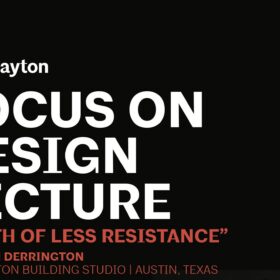
AIA Dayton Focus on Design Lecture
Join AIA Dayton as it welcomes Tim Derrington as its distinguished Focus on Design lecturer. Tim's lecture is "A Path of Less Resistance." - NOV 17

2026 Architecture Scholarship Recipients
The Dayton Chapter of the American Institute of Architects is pleased to announce its 2026 Architecture Scholarship recipients.

Annual Membership Meeting
Join us for Happy Hour and delicious pizza and salad! AIA Dayton members and sponsors admitted for free. - OCT 27